
Every Drop Matters: Why Water is the New Real Estate Asset
Bengaluru is known as India's Silicon Valley, but it is equally known for its historic network of lakes and its dependence on sustainable water resources. Rapid urbanisation, population growth, declining groundwater levels, and increasing demand have made water availability one of the city's most critical challenges. In this changing landscape, rainwater harvesting (RWH) has evolved from an environmental initiative into an essential component of responsible urban planning and a significant factor influencing real estate value.
For homebuyers, developers, and investors, water security is no longer just a utility consideration—it is becoming an important parameter when evaluating residential communities, commercial developments, and long-term property investments.
Why Rainwater Harvesting Matters in Bengaluru
Bengaluru receives substantial annual rainfall, yet much of it flows away as surface runoff. Rainwater harvesting captures and stores rainwater or helps recharge groundwater, reducing dependence on external water sources and improving long-term sustainability.
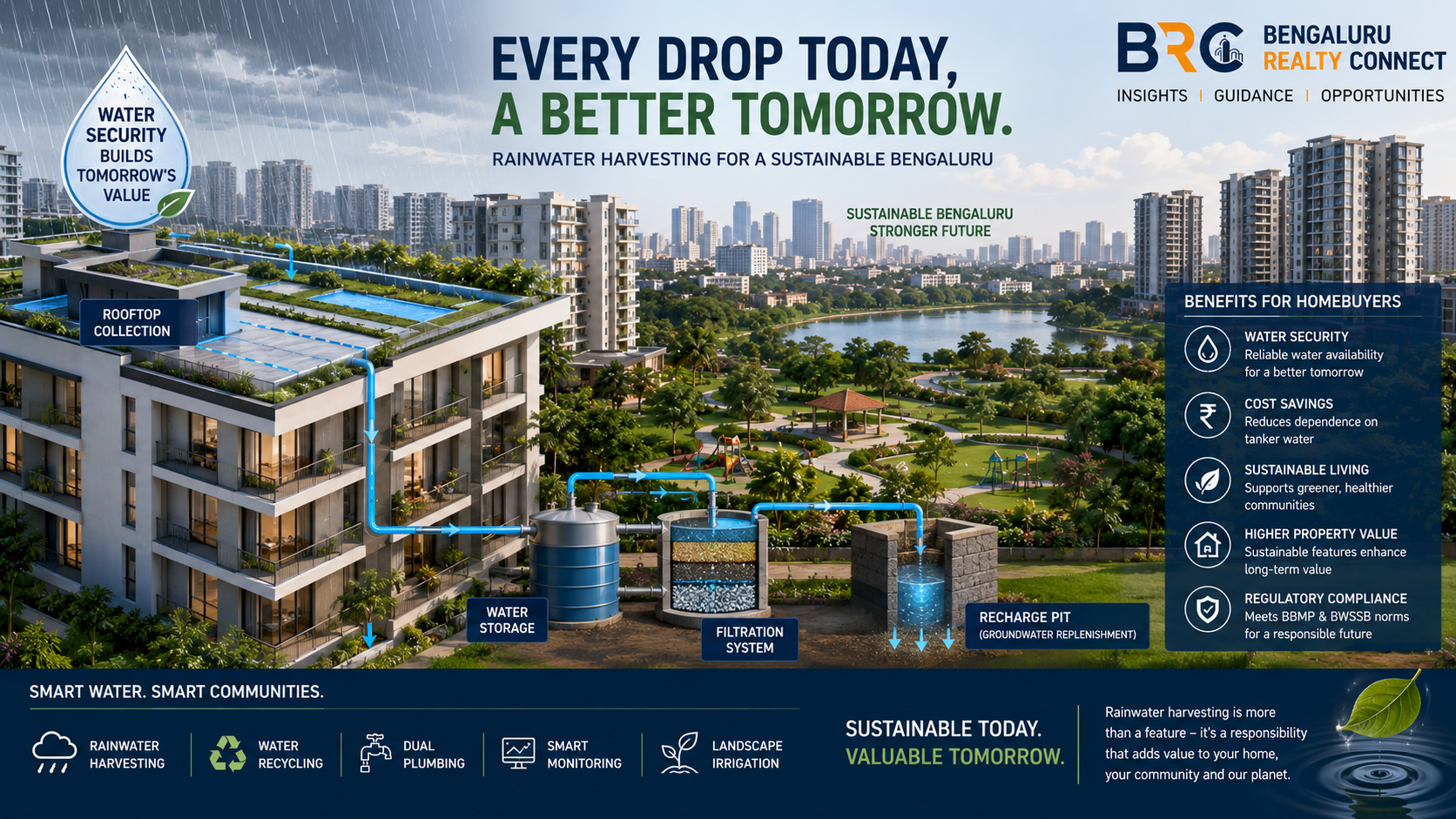
As urban development continues to replace open land with concrete surfaces, natural groundwater recharge has reduced considerably. Properly designed rainwater harvesting systems can help restore this balance by directing rainwater into recharge pits, storage tanks, and filtration systems.
Beyond environmental benefits, these systems also contribute to water resilience during periods of scarcity, supporting more reliable water availability for residential and commercial developments.
The Growing Importance for Real Estate
Water availability is increasingly influencing buyer preferences. Residential communities with well-planned water management systems are often perceived as better prepared to address long-term resource challenges.
Developers are incorporating rainwater harvesting alongside sewage treatment plants (STPs), water recycling systems, dual plumbing, smart water monitoring, and landscape irrigation to create more sustainable projects.
For investors, these features can enhance the long-term appeal of a development, particularly in locations experiencing rapid urbanisation and rising demand.
How Rainwater Harvesting Benefits Property Owners
💧 Improved Water Security
Helps supplement water availability and supports groundwater recharge.
🌱 Sustainable Living
Reduces dependence on external water sources and encourages responsible resource management.
💰 Potential Cost Savings
Efficient water management may help reduce reliance on tanker water and optimise water consumption, depending on local conditions and project design.
🏡 Better Community Planning
Supports greener landscapes, healthier ecosystems, and long-term resilience.
🌍 Environmental Responsibility
Contributes to groundwater conservation, flood mitigation, and sustainable urban development.
Impact on Property Value
Today's homebuyers increasingly evaluate more than location and amenities. Water reliability has become an important consideration, particularly in areas facing seasonal shortages.
Projects with integrated water management systems may benefit from:
- Greater buyer confidence
- Improved sustainability credentials
- Stronger long-term marketability
- Enhanced resident satisfaction
- Alignment with environmentally conscious lifestyles
However, property values are influenced by multiple factors, including location, infrastructure, market demand, construction quality, and overall project planning.
Emerging Sustainable Corridors in Bengaluru
Several growth corridors are witnessing increasing adoption of sustainable water practices:
📍 Whitefield
📍 Sarjapur Road
📍 Devanahalli
📍 Hebbal
📍 Hennur Road
📍 Budigere Cross
📍 Varthur
📍 Electronic City
📍 Yelahanka
📍 North Bengaluru
Large integrated townships and premium residential communities are increasingly incorporating comprehensive water management strategies.
Rainwater Harvesting in Modern Townships
Leading developments now integrate:
- Rooftop rainwater collection
- Recharge wells
- Percolation pits
- Water storage tanks
- Landscape irrigation systems
- Smart water meters
- Sewage treatment plants
- Greywater recycling
- Native landscaping
- Water-efficient plumbing
These features contribute to more resilient and environmentally responsible communities.
Technology is Improving Water Management
Modern residential projects are using technology to optimise water usage through:
- IoT-based water monitoring
- Leak detection systems
- Digital consumption analytics
- Automated irrigation
- AI-powered water management
- Smart sensors for storage tanks
These innovations improve operational efficiency while promoting resource conservation.
What Homebuyers Should Check
Before purchasing a property, buyers should evaluate:
✔ Rainwater harvesting system
✔ Water storage capacity
✔ Groundwater recharge facilities
✔ Sewage treatment plant (STP)
✔ Water recycling systems
✔ BWSSB water connection (where applicable)
✔ Water source diversification
✔ Maintenance practices
✔ Sustainability certifications
✔ Long-term water management plan
The Future of Bengaluru Realty
As climate resilience and environmental sustainability become central to urban planning, water management will play an increasingly important role in shaping Bengaluru's real estate market.
Developments that integrate responsible water conservation, efficient infrastructure, and sustainable design are likely to remain attractive to environmentally conscious buyers and institutional investors. While rainwater harvesting alone does not determine property performance, it is becoming an important indicator of thoughtful planning and long-term resilience.
BRC Investment Perspective
"In the future, successful real estate developments will not be defined only by luxury or location—they will also be judged by how responsibly they manage natural resources. Rainwater harvesting is no longer just a compliance measure; it is an investment in resilience, sustainability, and long-term value for both residents and investors."
BRC Sustainability Scorecard
| Parameter | Rating |
|---|---|
| Water Security | ⭐⭐⭐⭐⭐ |
| Sustainability | ⭐⭐⭐⭐⭐ |
| Environmental Impact | ⭐⭐⭐⭐⭐ |
| Community Value | ⭐⭐⭐⭐⭐ |
| Long-Term Resilience | ⭐⭐⭐⭐⭐ |
| Investor Appeal | ⭐⭐⭐⭐☆ |
Overall BRC Sustainability Score: 9.8/10
Related BRC Articles
- Integrated Townships in East Bengaluru
- Managed Farmlands Around Bengaluru
- Luxury Villas in Bengaluru
- North Bengaluru Investment Guide
- Smart Homes and Sustainable Living
- Understanding RERA
- Metro Connectivity and Property Appreciation
Useful Resources
- Bangalore Water Supply and Sewerage Board (BWSSB):
- Karnataka State Pollution Control Board (KSPCB):
- Bangalore Development Authority (BDA):
- Ministry of Jal Shakti:
Disclaimer
This article is intended for educational and informational purposes only and should not be considered legal, engineering, environmental, or investment advice. Rainwater harvesting requirements, municipal regulations, water availability, and project specifications may vary by location and are subject to change. Buyers and investors should independently verify project approvals, water infrastructure, sustainability features, and applicable regulations before making any real estate investment decision. Bengaluru Realty Connect (BRC) and Finfairs Global Private Limited recommend consulting qualified professionals for technical, legal, and investment guidance.
#RainwaterHarvesting #SustainableLiving #BengaluruRealEstate #WaterConservation #GreenBuildings #SmartCities #PropertyInvestment #Sustainability #EcoFriendlyHomes #UrbanDevelopment #BengaluruRealtyConnect #BRC

एक टिप्पणी छोड़ें
आपका ईमेल पता प्रकाशित नहीं किया जाएगा। आवश्यक फ़ील्ड * से चिह्नित हैं

